In Class
Instructions
If you were unable to make it in person
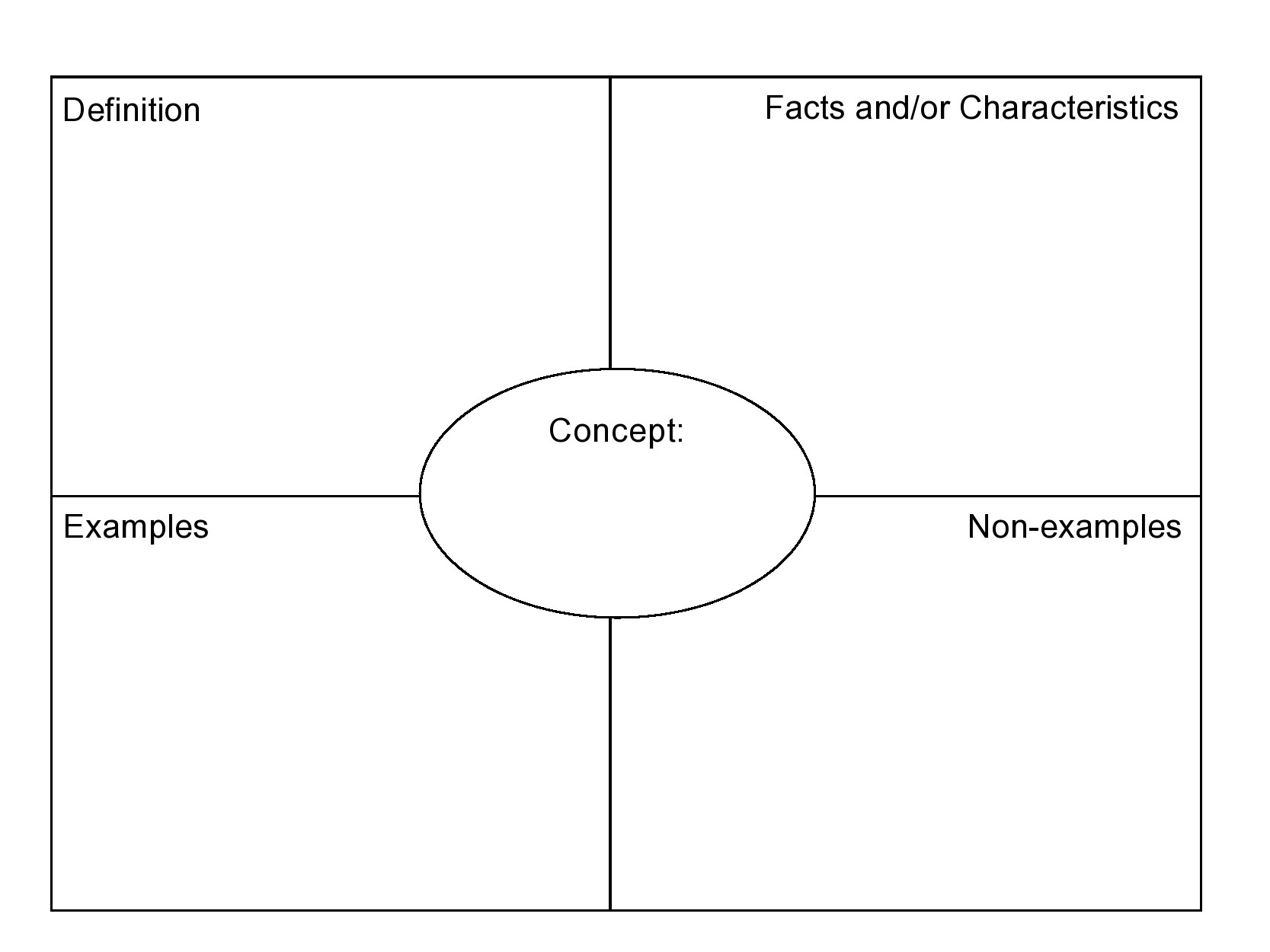
In the book Decolonizing Palestine: The Land, The Bible, The People, Palestinian theologian Mitri Raheb uses the big idea of “Settler Colonialism” to understand what is happening in Palestine and how to respond as a Christian. Today, we are going to define this concept by using a tool called the frayer model.
Use the definitions at the bottom of the page to fill out the frayer model handout. The recommended order is:
- Characteristics: According to the provided definitions, what are some characteristics of settler colonialism?
- Examples: What are some examples of settler colonialism?
- Non-examples: Non-examples are especially helpful when they are similar but distinct. (Hint: See Brown University Video)
- Definition: In your own words, what does settler colonialism mean?
Take a second to S-I-T:
- Surpising: What about your frayer model is suprising to you? How does it challenge/affirm your previous understanding of the US or Israel?
- Interesting: What questions does this spark for you? What might you want to learn more about?
- Troubling: What from the frayer model is troubling? Hold this as you pray with the Sabeel Wave of Prayer at the bottom of the page.
Resources
Frayer Model Handout
Definitions
Brown Univeristy: Choices Program
Video (1:40): What are Administrative and Settler Colonies?
Visualizing Palestine
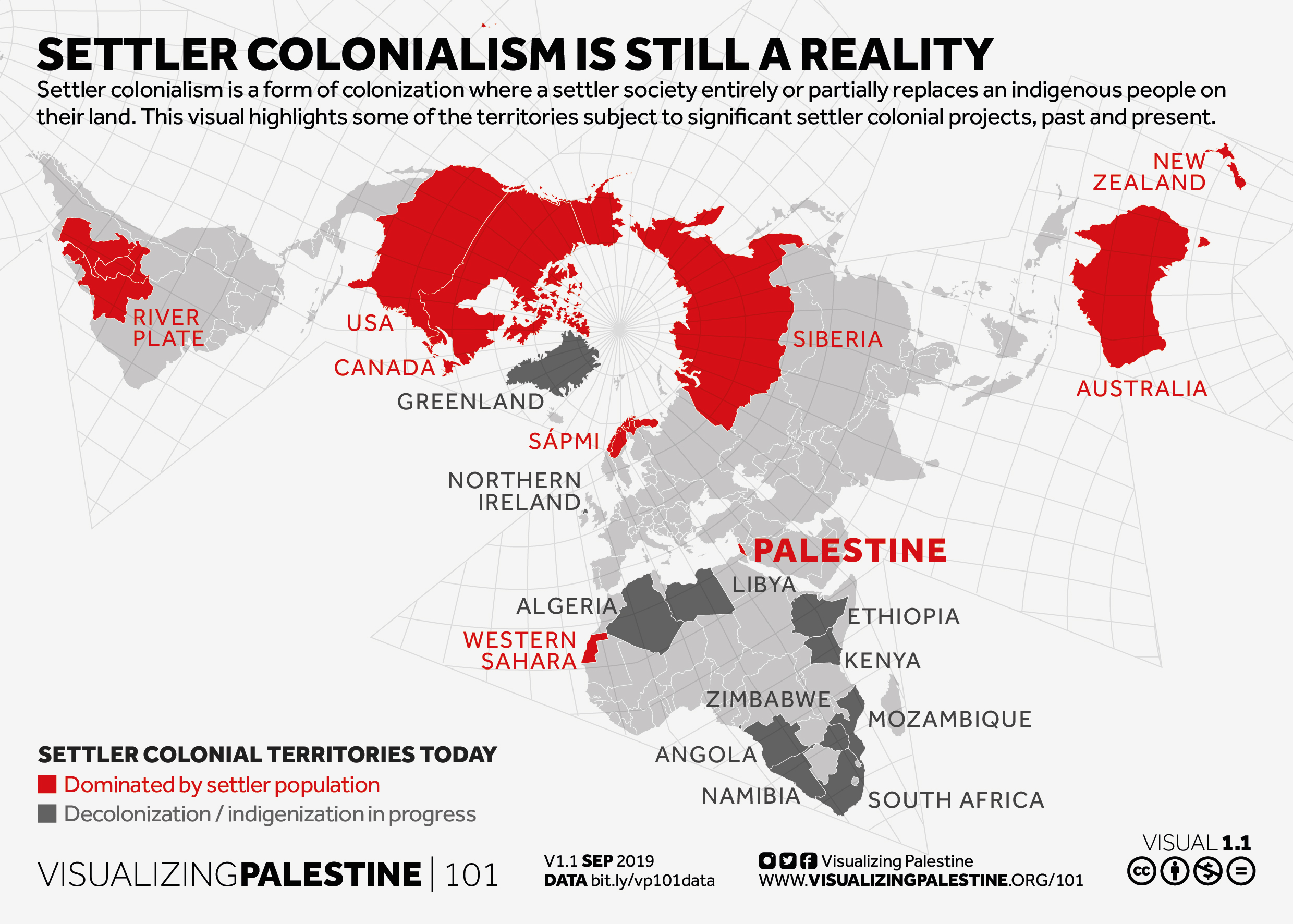
A distinct type of colonialism that functions through the replacement of indigenous populations with a settler society that, over time, develops its own distinctive identity and sovereignty.[1] The Zionist settler colonization of Palestine has been widely compared to settler colonialism in the United States, Canada, Australia, South Africa and elsewhere.[2]
[1] Oxford Bibliographies. 2017. Settler Colonialism [2] P. Wolfe. 2006. Settler colonialism and the elimination of the native
Decolonizing Palestine by Mitri Raheb
The framework of “conflict” is misleading to say the least. Even the description of the situation as occupation is inaccurate because, despite Palestine’s history, the situation over the past one hundred years cannot be described as occupation. There is a dire need for a new framework and a paradigm shift. This chapter argues that the situation prevailing in Palestine since the Balfour Declaration is one of settler colonialism…
The permanent settlement of colonists in an occupied land is the main feature that distinguishes settler colonialism from classical or neocolonialism. The settler colonialists establish and enforce state sovereignty and juridical control over the indigenous land, ultimately aiming to eliminate the native people. The natives become extraneous while the settlers are cast as natives through different political mechanisms, ideological constructs, and social narratives. The indigenous land is described as terra nullius, empty or barren land that is just waiting to be discovered, thus becoming the private property of the settlers. The native people are depicted with racist constructs as savage, violent terrorists, while the settlers are portrayed as the civilized and brave pioneers. To defend the settled property from the savage, a police state is created and is granted extraordinary power over the native people, including power over their civil affairs.
Prayer
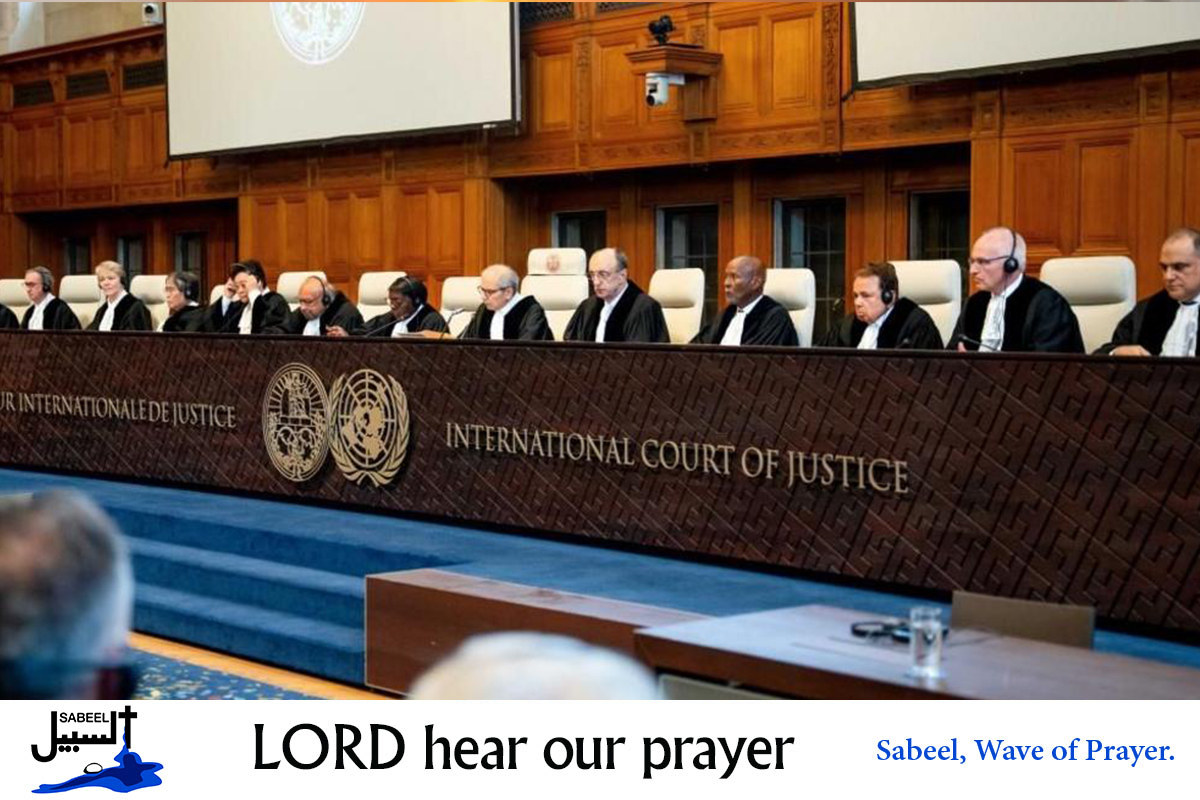
Sabeel’s Wave of Prayer is a prayer ministry that enables local and international solidarity. The prayer is used in serivces around the world and during Sabeel’s Thursday Communion service; as each community in its respective time zone lifts these concerns in prayer at noon every Thursday, this “wave of prayer” washes over the world.